Navigating the Depths of Cryptography: A CISSP Recap

Navigating the Depths of Cryptography: A CISSP Recap Hey there, friends! Welcome back to another episode of “Concepts of CISSP.”

Today, I’m excited to dive into a recap of our last discussion, focusing on the intriguing realm of cryptography. So grab a seat, and let’s embark on this journey together. In our previous video, we explored the fundamentals of cryptology, the art and science of encryption and decryption.

Cryptology branches into two main categories: cryptography and cryptanalysis. Cryptography involves the systematic process of transforming plain text messages into encrypted ones using a key, while cryptanalysis seeks to decipher encrypted messages without access to the key.

Picture this: you start with a plain text message, apply a key to encrypt it, and voila! You have your encrypted message, also known as ciphertext. To decrypt it, you simply reverse the process using the same key. It’s a dance between encryption and decryption, a fundamental concept in cryptography.

Now, let’s talk techniques. Cryptography offers two primary methods for transforming plain text into ciphertext: substitution and transposition. Substitution involves replacing characters, while transposition entails rearranging them using various mathematical operations. When you combine these techniques, you get a product cipher, adding layers of complexity to your encryption.

But wait, there’s more! Ever heard of Caesar Cipher, Playfair Cipher, or Rail Fence Technique? These are just a few examples of substitution and transposition techniques, each with its unique approach to encryption.

Now, onto the heart of encryption: the key. In cryptography, the key is everything. It determines the type of encryption used, be it symmetric or asymmetric. Symmetric encryption relies on a single key for both encryption and decryption, while asymmetric encryption utilizes two keys for the same purpose.

Key length plays a crucial role in encryption strength. A longer key means greater complexity and enhanced security, making decryption a formidable challenge for would-be attackers. Remember, the key is the gatekeeper to your encrypted messages.

In symmetric key cryptography, we delve into algorithm types and modes. Algorithm type dictates the size of the plain text encrypted in each step, while algorithm mode determines how encryption steps are executed. Stream ciphers encrypt bit by bit, relying solely on substitution, whereas block ciphers encrypt blocks of bits, incorporating both substitution and transposition.

Now, let’s not forget about key exchange.

When sharing keys between parties, ensuring their security is paramount. After all, a compromised key jeopardizes the integrity of your encrypted communications.

So, what’s next? In our upcoming video, we’ll unravel the intricacies of symmetric and asymmetric key encryption, shedding light on key exchange mechanisms and security measures.

If you found this journey through cryptography enlightening, give it a thumbs up, share it with fellow CISSP aspirants, and don’t forget to subscribe for more insights. Until next time, stay curious and stay secure. Thank you for tuning in!

CISSP Series Domain3 Episode 24 – Cryptography 1000ft overview #cissp

Welcome back!!!

It’s been a while since our last episode in the CISSP series, but I’m thrilled to dive back into the fascinating world of information security with you all. Apologies for the delay; life has a way of keeping us on our toes, doesn’t it? But here we are, ready to unravel the mysteries of cryptography, a topic close to my heart and a driving force behind my journey into the realm of information security.

Understanding Cryptography and Cryptology: Let’s begin with the basics. Cryptology, the science of encryption and decryption, forms the backbone of secure communication in the digital age. Within cryptology, we encounter two distinct branches: cryptography and cryptanalysis. – Cryptography: The art of encoding messages, ensuring that only authorized individuals can decipher them. – Cryptanalysis: The counterpart to cryptography, involving the deciphering of encrypted messages through various methods and techniques.

Exploring Encryption Techniques: At the core of cryptography lies the transformation of plaintext into ciphertext, a process essential for safeguarding sensitive information. We employ two primary techniques for this transformation:

1. Substitution Technique: Here, characters in the message are replaced with alternate characters, adding a layer of complexity to the encoded text. The infamous Caesar Cipher exemplifies this method. 2. Transposition Technique: Unlike substitution, transposition involves rearranging the order of characters within the message, often through permutation or other manipulations. Techniques like the Vernam Cipher and rail-fence cipher fall under this category.

While delving into these techniques’ intricacies is fascinating, it’s important to maintain a high-level understanding, especially for CISSP exam purposes. Navigating Cryptographic Techniques: As we venture deeper, we encounter two fundamental cryptographic techniques:

– Symmetric Key Cryptography: Employing a single key for both encryption and decryption, this method simplifies the process while maintaining security.

– Asymmetric Key Cryptography: Utilizing a pair of keys – public and private – for encryption and decryption, respectively, this technique offers enhanced security through key distribution.

Understanding these techniques lays the groundwork for comprehending the nuances of encryption and decryption mechanisms.

Algorithm Types and Modes: Within symmetric key cryptography, algorithm types and modes play crucial roles in defining encryption processes.

– Algorithm Type: Determines the input size of the message, whether it’s processed as a stream or block cipher.

– Algorithm Mode: Specifies the details of the cryptographic algorithm, such as encryption mechanisms and block processing.

Exploring modes like Electronic Code Book (ECB), Cipher Block Chaining (CBC), Cipher Feedback (CFB), Output Feedback (OFB), and Counter Mode provides insight into the diverse encryption methodologies employed in information security.

Linking Cryptography to Information Security Principles: As we journey through the realm of cryptography, it’s vital to remember its broader implications for information security. The six fundamental principles – confidentiality, integrity, authenticity, non-repudiation, access control, and availability – serve as guiding beacons, shaping our approach to securing digital assets.

Thank you for embarking on this cryptographic expedition with me! While our upcoming videos may adopt a more verbal format, rest assured, the passion for sharing knowledge remains undiminished. Don’t forget to like, subscribe, and share your thoughts in the comments below. Together, let’s continue unraveling the mysteries of information security, one episode at a time.

Until next time, stay curious, stay secure!

#CISSP #CCSP #nist

Risk Appetite vs. Risk Tolerance

Let’s use a metaphorical scenario to create a vivid representation in words to understand the difference between risk appetite and risk tolerance in cybersecurity:

Imagine a Tightrope Walker:

Risk Appetite:

  • The tightrope walker is adventurous and daring, choosing to perform daring acrobatic moves on the high wire. This reflects a high-risk appetite, as the walker willingly embraces risks to entertain and impress the audience.
  • In the cybersecurity realm, this is akin to an organization willing to adopt cutting-edge technologies and innovations, taking calculated risks to gain a competitive advantage in the market.

Risk Tolerance:

  • Now, consider a safety net beneath the tightrope. This safety net represents the organization’s risk tolerance. No matter how adventurous the walker is, the safety net ensures that the consequences of a potential fall are limited and manageable.
  • In cybersecurity, this is analogous to an organization setting limits on the acceptable impact of a cyberattack. The safety net represents the organization’s ability to recover from the incident without suffering severe, unrecoverable losses.

Key Takeaway from this analogy:

  • The tightrope walker’s adventurous moves (risk appetite) showcase a willingness to take risks for the sake of performance.
  • The safety net (risk tolerance) represents a safety buffer, limiting the impact of a potential fall and ensuring a certain level of resilience.

In cybersecurity, just like the tightrope walker needs both a daring spirit and a safety net, organizations need a balance between risk appetite (willingness to innovate and take risks) and risk tolerance (ability to manage and recover from the consequences) for effective and resilient cybersecurity management.

In the context of cybersecurity, risk appetite and risk tolerance are two related but distinct concepts that play a crucial role in managing and mitigating potential risks. Let’s break down the differences between them with simple examples that may be helpful for the CISSP exams:

Risk Appetite:

  • Definition: Risk appetite refers to the amount and type of risk that an organization is willing to accept or tolerate in pursuit of its business objectives. It reflects the organization’s willingness to take on risk to achieve its goals.
  • Example: Imagine a financial institution that decides to expand its online services to attract more customers. The organization may have a high risk appetite for technological innovation to gain a competitive edge. They might be willing to accept a higher level of cybersecurity risk associated with implementing new technologies, knowing that the potential rewards outweigh the risks.

Risk Tolerance:

  • Definition: Risk tolerance is the level of risk that an organization is willing to endure or the amount of loss it can withstand without significantly impacting its ability to achieve its objectives. It is more about the organization’s ability to bear the consequences of a risk event.
  • Example: Continuing with the financial institution example, even though they have a high risk appetite for adopting new technologies, they may have a low risk tolerance for potential financial losses due to cyberattacks. In this case, the organization sets a limit on the acceptable level of financial impact, ensuring that it can recover from an incident without compromising its overall stability.

Key Differences:

  • Focus: Risk appetite is about the willingness to take risks to achieve objectives, while risk tolerance is about the ability to endure the consequences of a risk event.
  • Decision-Making: Risk appetite guides strategic decisions on how much risk an organization is willing to take to meet its goals. Risk tolerance influences operational decisions by setting limits on acceptable losses.
  • Flexibility: Risk appetite can change based on business objectives and market conditions. Risk tolerance tends to be more stable and is often set within defined parameters.

In summary, risk appetite is the organization’s proactive approach to risk-taking, while risk tolerance is its reactive capacity to absorb the impact of risks. Both concepts are integral to effective risk management in the cybersecurity domain.

Here’s a table summarizing the key differences between risk appetite and risk tolerance in the context of cybersecurity:

AspectRisk AppetiteRisk Tolerance
DefinitionAmount and type of risk an organization is willing to accept or tolerate in pursuit of its objectives.Level of risk an organization can endure or the amount of loss it can withstand without significantly impacting its objectives.
FocusWillingness to take risks to achieve objectives.Ability to endure the consequences of a risk event.
Decision-MakingGuides strategic decisions on how much risk the organization is willing to take.Influences operational decisions by setting limits on acceptable losses.
FlexibilityCan change based on business objectives and market conditions.Tends to be more stable and is often set within defined parameters.
Time HorizonForward-looking, influencing future risk-taking decisions.Backward-looking, determining the organization’s capacity to absorb past or current risks.
ExampleA financial institution with a high-risk appetite for technological innovation to gain a competitive edge.The same financial institution has a low risk tolerance for potential financial losses due to cyberattacks.
PurposeGuides the organization in proactively managing risks to achieve its goals.Defines the organization’s ability to recover from and absorb the impact of risks.

Understanding these distinctions is essential for effective risk management and is likely to be beneficial in the context of the CISSP exams. Best of luck for your CISSP Exam!!!

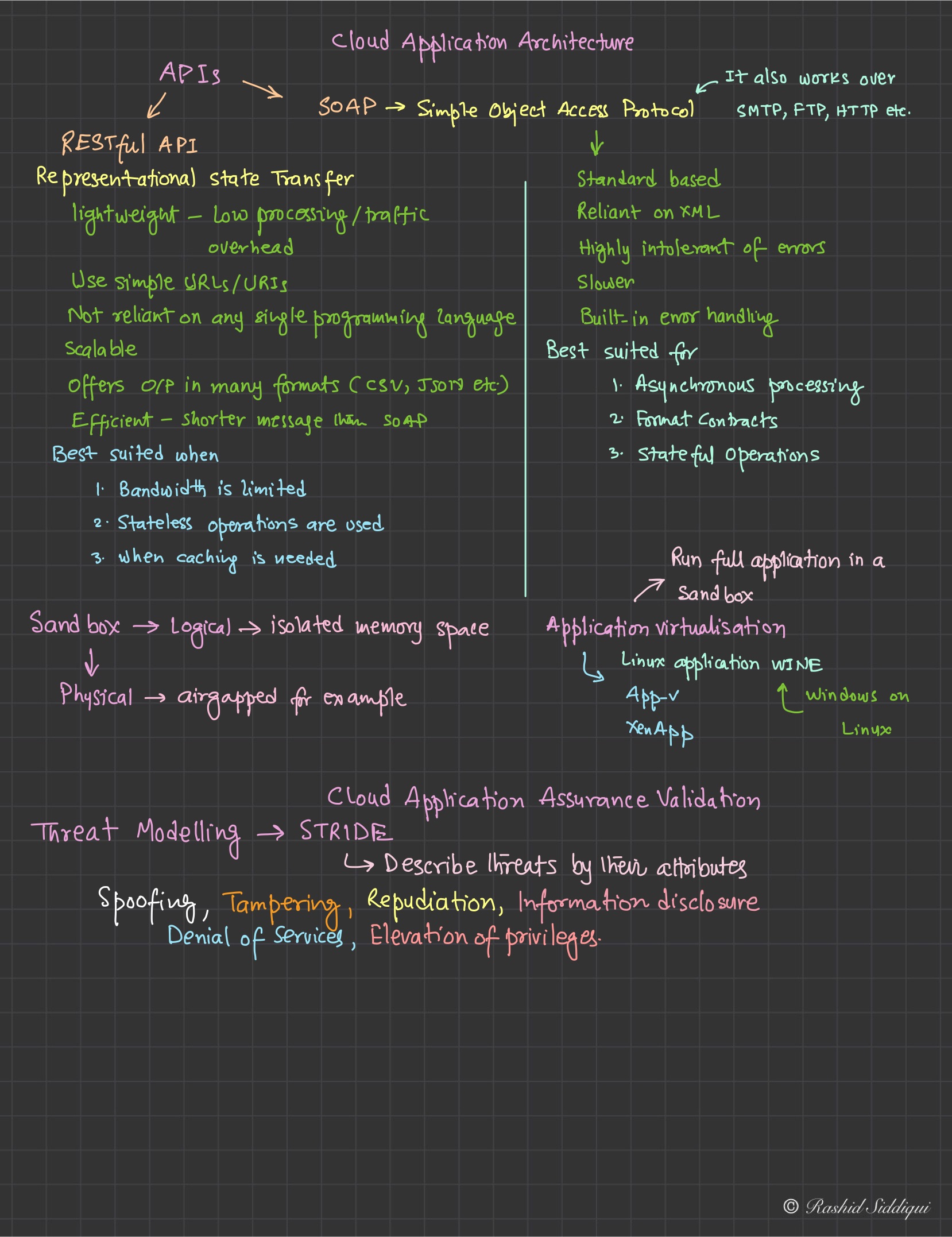
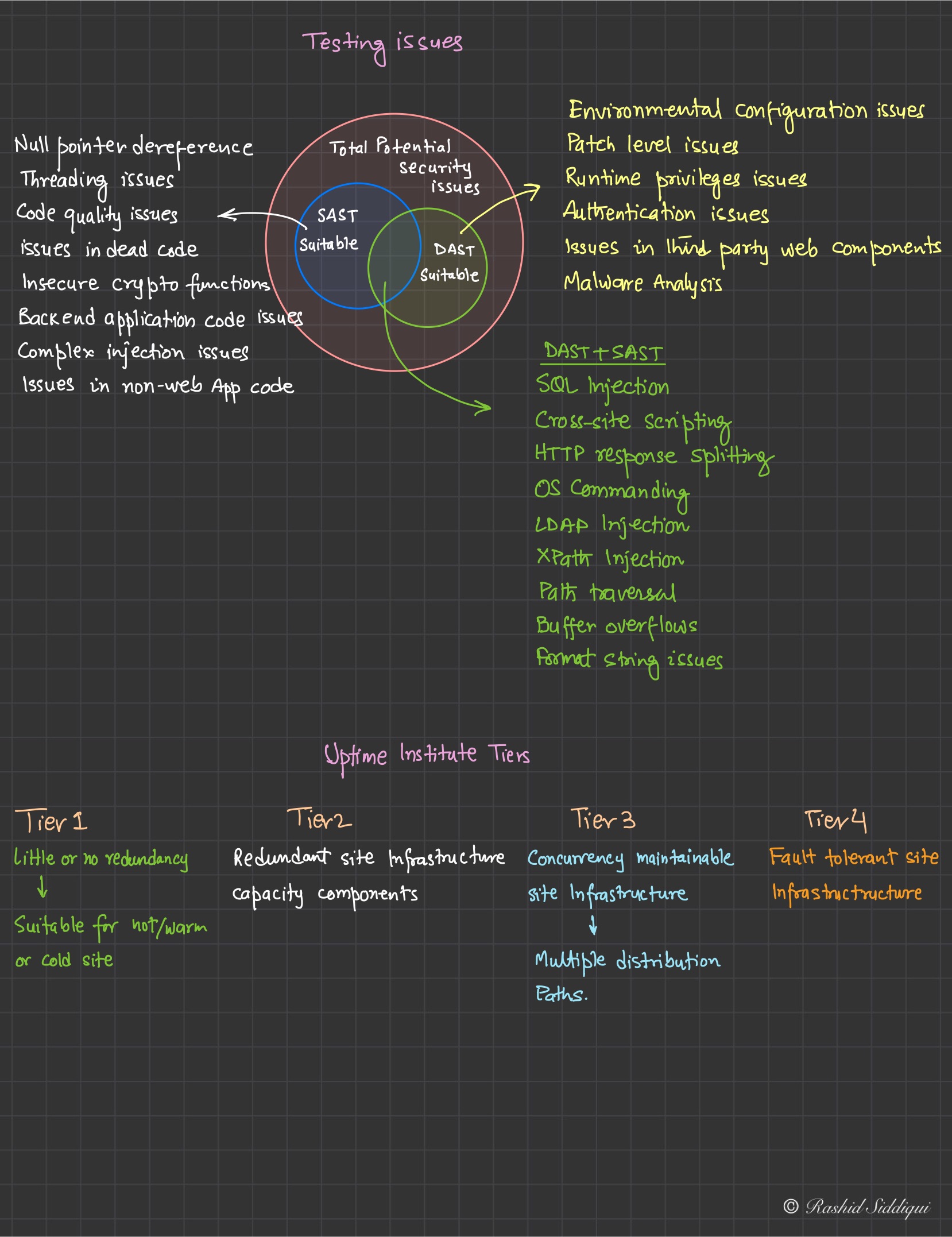
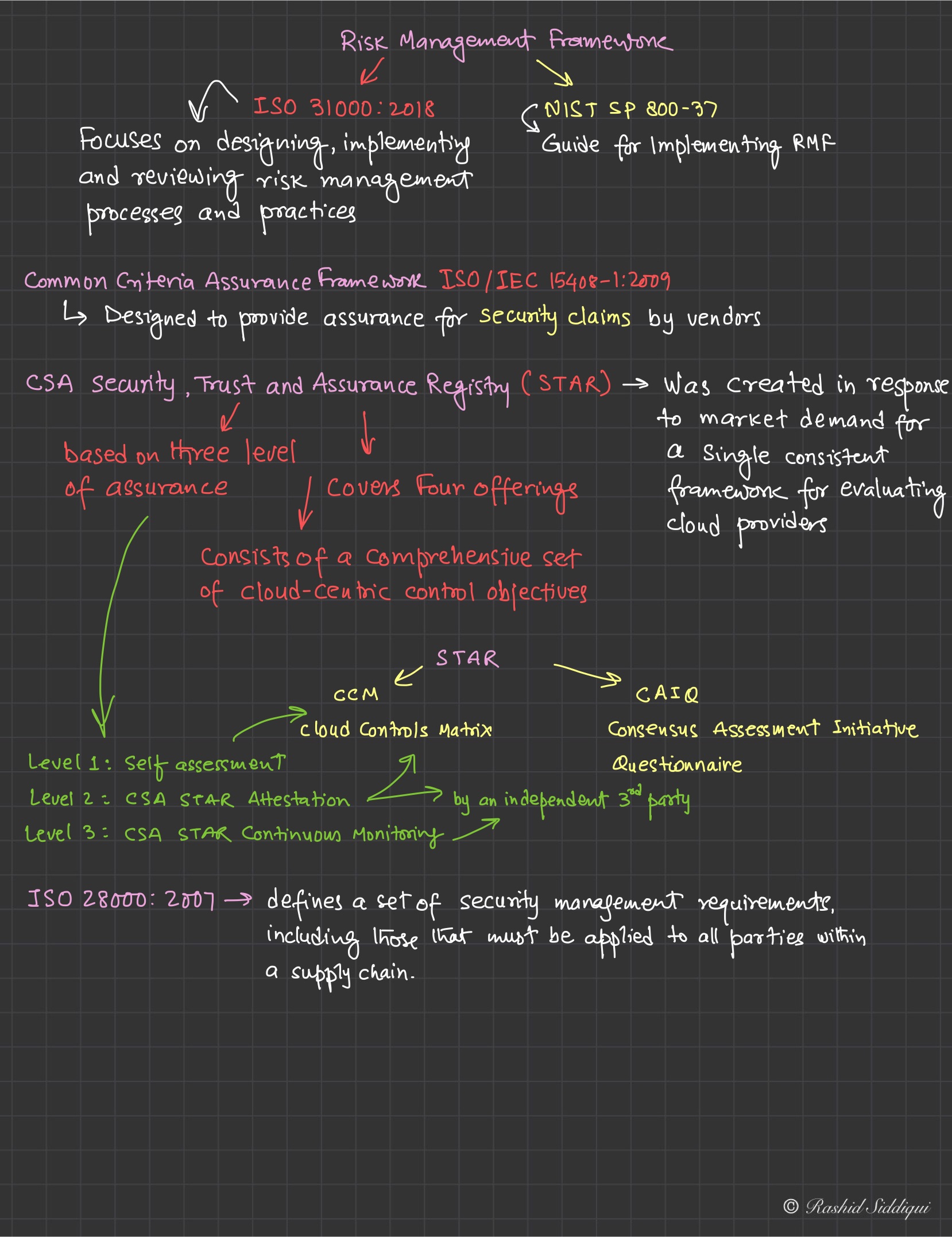
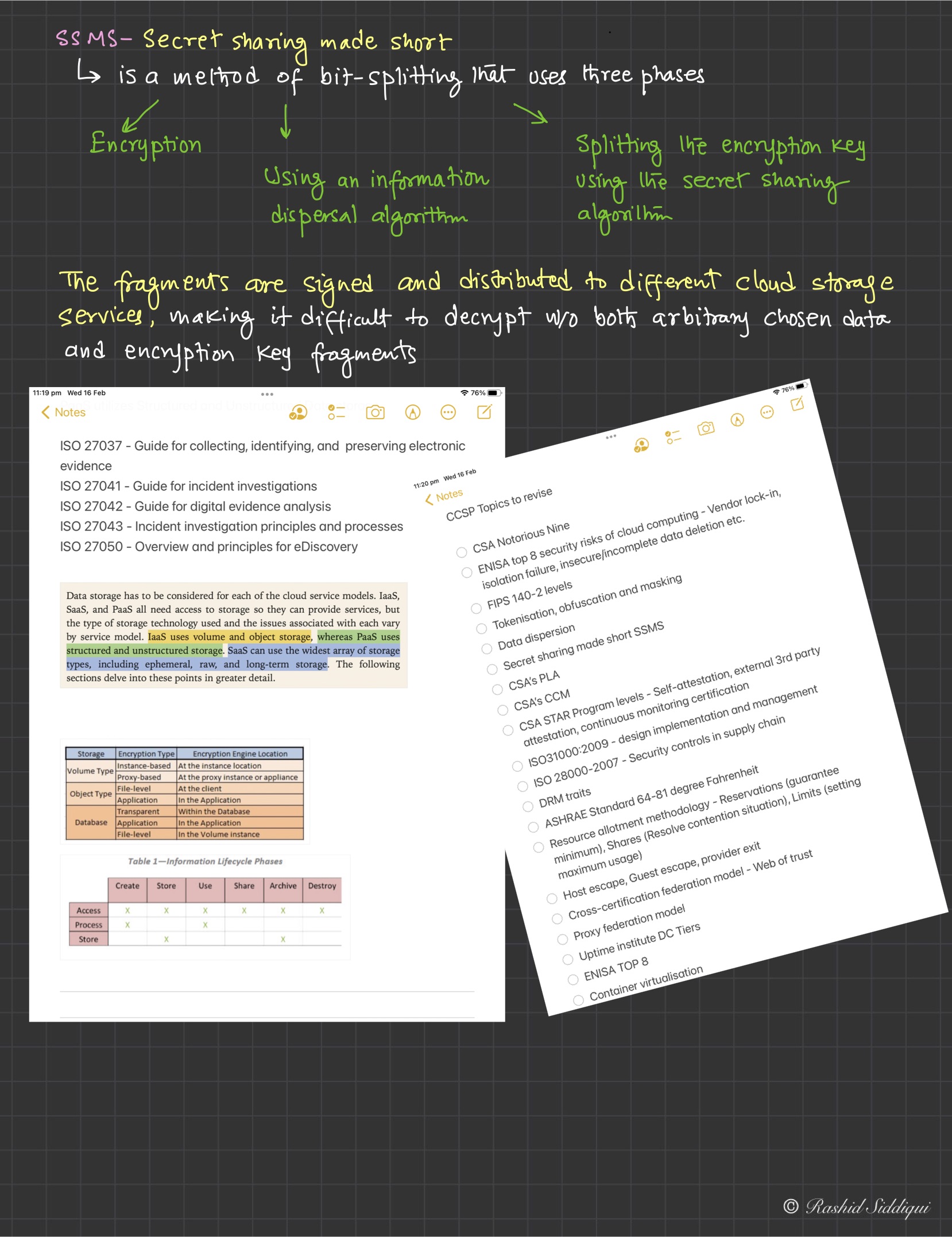
CCSP Final Notes – Before Passing the Exam

🧎‍♂️All praise 😇 to Almighty Allah for giving me the strength to get ✅ CISSP and ✅ CCSP both within a span of 2 months 🎯. The Journey was too exciting, intense and anxiety filled.

📗 Sharing here the final notes for CCSP from Ben Malisow’s book 📚 and question practices takeout. I will try to populate this blog with more useful informations iA.

🎪 Following is my #CCSP experience,

🎯 When i passed #CISSP on 30th Dec, i felt this to be a miracle. I was not sure 🤨 about how prepared i was, but i was kind of sure that i have exhausted all my energy 🏋️‍♀️ in keeping nimble conceptual butterflies 🦋 within my reach 🏃🏻‍♂️.

☪️ Experiences like these where we feel a calling getting fulfilled in some mysterious ways reminds me of following ayah of the guiding book i follow,

“… And He found you lost and guided [you],”

– Holy Quran, Chapter 93 Verse 7.

🎯 For CCSP I followed Sybex 2nd edition CCSP book by Ben Malisow. The book is excellent in the way it flows with the content. It took me a week or 10 days to finish the book in early January [I love reading and it helped me,]. While I was almost finishing the book I read a bit of CCSP CBK by Gordon. However, I do not wanted myself to climb the uphill again and redo all my notes, I kept this book aside.

🎯 For questions, I referred the official ISC2 app based practice on my phone. It is convenient, in malls, in parks, anywhere we can refer quick questions and refresh dormant topics.

🍀 Interestingly, for CISSP I referred a lot of videos and online materials (and it was a great help from Luke AhmedPrabh Nair Your Cybersecurity Instructor / CISO and countless Infosec champions online), but for CCSP, I followed the old school obscure path of trusting a text book, doing questions and exercise and hoping to score well.

🔬🧪 The key secret in both the exams is how you form a solid story in your mind to keep concepts alive till your exams day, without getting overly frustrated. To master this secret we need a calm attitude, serially processing one topic at a time with all enthusiasm, creativity, and hard work. Friends, family and extended meaningful social media connections always help.

🌦Somewhere in between I got interested in Azure (courtesy Ranga Karanamin28minutes i passed AZ-900), and preparing for Azure helped me in getting some mental Visuals of how the cloud looks like from inside. However, I will not suggest that this is a must for the exam. It depends on individual’s taste and strength.

👍 Best of luck to all my digital family members in hitting the journey and I hope we all will inspire each others with their success stories.

🌈 My CCSP notes are revised here: https://lnkd.in/gJEJC9jn

🚴‍♀️ For me it was fun, 🎡 joyride, 3 months, 3 certifications ✅

😇 JazakAllah Khair,
📚 Happy Learning,