Modern Warfare and Mass Surveillance – The Invisible Hand

In today’s world, warfare has evolved far beyond the conventional battlefield. The tampering of pagers, walkie-talkies, and other communication tools in political warfare is merely the tip of the iceberg. What lies beneath is a complex, long-term strategy designed to control and manipulate systems in ways most of us cannot even begin to fathom. This post delves into the intricacies of modern warfare and mass surveillance, examining how state actors use technology as a covert tool for geopolitical dominance.

The story of mass surveillance burst into the public consciousness in 2013 when Edward Snowden, a former National Security Agency (NSA) contractor, revealed the extent to which the NSA had been monitoring not only foreign governments but also its own citizens. Snowden’s leaks exposed the NSA’s mass data collection programs, which included PRISM, a surveillance system that gathered data from tech giants such as Google and Facebook . What was once the stuff of dystopian fiction became a reality, raising concerns about privacy, state power, and the ethical boundaries of technology.

These revelations serve as a chilling reminder that modern warfare is not just about real-time action on the battlefield. It involves pre-emptive strikes, often executed silently and invisibly through technological manipulation. The NSA’s use of mass surveillance is just one part of a broader strategy where data is the new weapon, and control over communication systems becomes a pivotal force in global dominance.

When we examine the relationship between surveillance and warfare, Israel’s intelligence and technological prowess come into focus. Israeli cybersecurity firms like NSO Group, the creators of Pegasus spyware, exemplify how technology can be weaponized. Pegasus, which gained global attention for its ability to infiltrate smartphones undetected, is known to have been used against activists, journalists, and even heads of state . However, Pegasus is just the visible surface. The deeper reality involves long-term efforts to introduce vulnerabilities into systems that can be exploited at the right moment.

Israel’s geopolitical positioning makes it a key player in mass surveillance across the Middle East. Many governments in the region, including Egypt, Syria, and Lebanon, use electronic equipment supplied by global tech giants. Yet, the potential for tampering in these devices during the manufacturing process remains a significant concern. As the transcript points out, with thousands of Internet of Things (IoT) devices, Wi-Fi routers, and other electronics in use, it’s impossible to check each for tampering.

This is not merely a case of social engineering—it’s a sophisticated form of advanced layered social engineering, where vulnerabilities are introduced during production and activated at the appropriate moment.

The incident involving pagers acting as bombs and walkie-talkies malfunctioning in real-time highlights the gravity of supply chain attacks. These attacks target the production and distribution networks of technology, allowing malicious actors to introduce vulnerabilities that can later be exploited . Supply chain attacks require years of planning and precise execution. They are not reactive measures but rather proactive strategies designed to create long-lasting control over communication systems.

While hardware tampering is undoubtedly complex and requires high levels of engineering expertise, software-based supply chain attacks are comparatively easier to execute. Once a sophisticated actor has access to a hardware system, compromising its software becomes significantly simpler. Given that software can be modified remotely and often invisibly, malicious actors can inject malware or spyware into a device without physical access. The SolarWinds breach in 2020 is a prime example of this; attackers managed to insert malicious code into a widely used IT management software, compromising thousands of government and corporate networks globally .

As complex as hardware tampering is, software manipulation presents even greater risks because of its ease, scale, and ability to be executed without detection. Unlike hardware tampering, where sophisticated techniques are needed to embed malicious components during the manufacturing process, software supply chain attacks can be deployed by compromising a single update. With global reliance on digital infrastructure, the risks posed by such software tampering are immense. Once a powerful entity gains control over software updates, they can introduce backdoors or vulnerabilities that may remain unnoticed for years.

In the broader geopolitical context, Israel has demonstrated a mastery of this covert warfare. By influencing or controlling the technology infrastructure in surrounding countries, Israel ensures that it can carry out its strategic objectives without direct confrontation. This form of warfare, which blends surveillance, espionage, and sabotage, represents a new era where control over information and communication technology becomes the primary objective.

In modern warfare, state actors often collaborate with corporations and big tech companies. As noted, Israel may not always be the producer of the technologies it uses, but it has the power to influence those who are. In recent years, companies like IBM, Cisco, and Huawei have faced allegations of either willingly or unwittingly providing backdoors into their products . The inherent vulnerabilities in these systems can be used by state actors to gain intelligence, disrupt operations, or even engage in acts of sabotage.

For instance, Apple’s decision to withdraw its case against NSO Group highlights the delicate balance between cybersecurity, privacy, and geopolitics. While the details behind this move may not be fully known, it undoubtedly signals the challenges tech companies face when dealing with powerful state-aligned entities that wield sophisticated surveillance tools like Pegasus. As the battle for control over digital privacy intensifies, Apple’s withdrawal raises more questions than it answers—particularly about the extent to which global tech companies can safeguard their users from the prying eyes of governments with vast technological reach.

Moreover, the widespread use of consumer electronics, from smartphones to routers, means that no one is immune to surveillance. Even with regulatory certifications and quality assurance in place, it’s almost impossible to detect hidden hardware or software designed to act as a backdoor for espionage. For instance, China’s alleged tampering with Supermicro hardware, leading to concerns about espionage, is a testament to the difficulty of detecting supply chain manipulations .

The future of warfare is already here, and it doesn’t look like what we might have expected. It is not about tanks and troops, but about data, surveillance, and control over communication networks. What is most concerning is the invisible nature of this warfare. As noted in the transcript, “the exact depth to which it is happening is something in the imagination.” Yet, we know that powerful nations and corporations are quietly shaping the geopolitical landscape through these covert means.

The pagers and walkie-talkies that malfunctioned are more than just isolated incidents—they are warnings of what is to come. As long as states continue to use technology as a weapon in the geopolitical arena, the boundaries between civil liberties and national security will remain blurred. Our challenge is to recognize these invisible threats and find ways to protect ourselves in a world where mass surveillance and supply chain attacks have become the new norm.

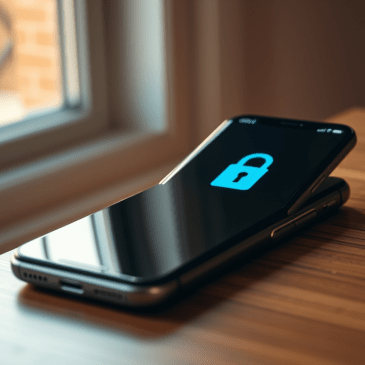
The Hidden Threat – Are Your Devices Truly Safe?

In the age of rapid technological advancements, the question of whether our devices are truly safe has taken center stage globally. The issue is no longer just about surveillance and eavesdropping; it’s about the more sinister possibility of weaponized gadgets that can pose life-threatening dangers to everyday users. The recent events in Lebanon, where numerous pagers exploded simultaneously, have raised concerns about the new and dangerous face of terrorism that the world may have to confront.

The simultaneous explosion of multiple pagers in Lebanon has left people bewildered and fearful. How did these pagers, once a popular communication device, turn into lethal weapons? Theories have emerged that either a factory flaw or external tampering—perhaps by Israeli intelligence—may have been responsible for planting explosive pagers in Lebanon. This unprecedented form of terrorism suggests that our reliance on everyday gadgets, from phones to laptops, could now become a potential risk.

In the 1990s, pagers briefly gained popularity in India and around the world, serving as messaging devices. While modern society has shifted towards smartphones and other devices, pagers have found niche uses in hospitals and restaurants, where quick, silent communication is needed. However, the Lebanon event shows that even the most innocuous electronic gadgets can be weaponized.

The implications are staggering. If pagers can be turned into bombs, then no electronic device—phones, laptops, even headphones—can be considered entirely safe anymore. Take the case of the Pegasus spyware, which can covertly record conversations, activate a phone’s camera even when it’s turned off, and monitor users without their knowledge. These developments should raise alarms about how vulnerable our personal devices are to malicious attacks.

Edward Snowden, the whistleblower who revealed the mass surveillance programs conducted by the U.S. government, has repeatedly warned about the risks posed by technology. In this particular case, if pagers were indeed rigged with explosives from their factories, Snowden’s concerns about the potential for large-scale harm through digital devices seem even more prescient. As he pointed out, these threats go beyond mere surveillance—devices can now be used for terror.

The Lebanese explosion echoes a darker trend where technology is being increasingly integrated into violent conflicts. One particularly chilling historical parallel comes from the 2005 film Munich by Steven Spielberg. The movie depicts Israel’s Mossad using a phone to assassinate Mahmoud Al-Hamsar, a member of the Palestinian Liberation Organization (PLO), by replacing his handset with an explosive device. When Hamsar answered the phone, it detonated, marking a brutal revenge by Israeli intelligence for the 1972 Munich Olympics massacre. Similarly, in 1996, an incident occurred where Hamas operatives were targeted with a Motorola Alpha phone rigged with 50 grams of explosives. As soon as the recipient picked up the phone, it exploded, highlighting how easily communication devices can be weaponized.

While the film Munich was criticized for equating counterterrorism actions with terrorism itself, it exposed an uncomfortable truth: violence and technological ingenuity in warfare are intertwined. The idea that no distinction exists between terrorism and counterterrorism in such scenarios becomes starkly evident when devices designed for communication are repurposed for destruction.

The implications of the Lebanon incident and the weaponization of devices are profound. If terrorists and state actors can turn everyday gadgets into tools of violence, then the lines between digital security, terrorism, and warfare become increasingly blurred. The event raises critical questions for policymakers and technology developers: how can we ensure that everyday electronic devices remain safe? Can we trust that our phones, laptops, or pagers won’t be tampered with by malicious actors, whether states or terror organizations?

Moreover, Snowden’s revelations about the U.S. National Security Agency’s (NSA) practices—where commercial shipments of electronic devices were intercepted and implanted with tracking devices—further exacerbate these concerns. His 2013 leaks, in collaboration with journalist Glenn Greenwald, revealed that the NSA was modifying electronics in transit to include surveillance capabilities, a practice that mirrors the fears raised by the Lebanon pager incident.

The pager explosions in Lebanon represent a dangerous precedent in the ongoing evolution of terrorism. In an increasingly connected world, where electronic devices are ubiquitous, the potential for these tools to be turned into weapons should not be underestimated. From smartphones that record and spy on us to pagers that explode without warning, the digital age is not just a time of convenience—it’s also a period where constant vigilance is required.

As we move forward, it is crucial that individuals and governments alike remain aware of the dangers posed by the intersection of technology and conflict. We must ask ourselves: can we truly trust the gadgets we carry with us every day? Or has the digital age ushered in a new era where the devices designed to connect us might one day tear us apart?

Is Phone Spying Preventable?

In an increasingly digital world, the question of phone spying has become a significant concern. With the rise of sophisticated hacking tools like Pegasus, malicious actors can gain unauthorized access to personal data, communications, and even control over devices. This raises a critical issue: Is phone spying preventable? The answer is both yes and no. While certain security measures can significantly reduce the risks, no device is entirely immune to spying in today’s interconnected environment.

The Reality of Phone Spying

Phone spying refers to the unauthorized surveillance of a person’s phone activities, often through malware, unauthorized apps, or vulnerabilities in the phone’s operating system. Notably, spyware like Pegasus, developed by NSO Group, has demonstrated the capacity to infect smartphones without user interaction, collecting data, recording calls, and even turning on cameras and microphones remotely. According to a report by Amnesty International, this spyware has been used against journalists, human rights activists, and political figures, heightening concerns about privacy and security in the digital age .

Can It Be Prevented?

1. Awareness and Responsible Usage
The first line of defense is being aware of the risks and responsible device usage. Users should be cautious about the apps they download, avoid clicking suspicious links, and regularly update their devices. According to Edward Snowden, a whistleblower who revealed large-scale government surveillance, many people unwittingly compromise their own privacy by neglecting these basic security measures . He also points out that governments and corporations may exploit weak security settings to conduct mass surveillance .

2. Encryption and Secure Communication
End-to-end encryption (E2EE) is one of the most effective ways to protect phone communications. Encryption ensures that only the sender and the intended recipient can read messages, reducing the risk of interception. Apps like Signal and WhatsApp employ E2EE, making it difficult for third parties to access messages in transit. However, these measures are not foolproof, as attackers can still exploit vulnerabilities within devices themselves .

3. Software Updates and Patches
One of the leading causes of phone spying is outdated software. Phone manufacturers and software developers regularly release patches that fix known vulnerabilities, and failing to install these updates can leave devices exposed to malware attacks. In 2021, Apple issued a critical patch after Pegasus was found to exploit a zero-day vulnerability in iPhones, allowing attackers to install spyware without user interaction .

4. Trusted Sources for Apps and Services
Another preventive step is downloading apps only from trusted sources like the Apple App Store or Google Play Store. Sideloading apps from third-party websites or dubious sources increases the likelihood of installing spyware or malicious software. According to research from cybersecurity firm Kaspersky, nearly 30% of mobile malware infections result from apps downloaded outside of official app stores .

Limitations of Preventive Measures

1. Advanced Persistent Threats (APTs)
For well-funded and technically sophisticated adversaries, such as nation-states, standard security measures may not be enough. Advanced Persistent Threats (APTs) are tailored attacks that exploit zero-day vulnerabilities—previously unknown flaws in software that manufacturers have not yet patched. These attacks often bypass regular security measures, making them challenging to prevent .

2. Backdoor Access
Phone manufacturers and governments sometimes have backdoor access to devices for surveillance purposes. This is done under the guise of national security, as seen in the U.S. National Security Agency’s (NSA) mass surveillance programs, which were exposed by Edward Snowden in 2013 . The use of such backdoors means that, in certain cases, privacy cannot be guaranteed, as these vulnerabilities are deliberately placed within systems.

3. Supply Chain Attacks
An often-overlooked vulnerability is in the supply chain. As highlighted in the 2020 SolarWinds hack, attackers can target software or hardware during the manufacturing or shipping process, inserting spyware before the product even reaches the consumer. Supply chain attacks are notoriously difficult to detect and prevent, especially for end users .

Can We Secure the Future?

While perfect prevention might be unrealistic, constant vigilance, better encryption, and timely software updates can minimize the risks. Governments, too, have a role to play by enforcing stronger privacy laws and pressuring tech companies to prioritize security over convenience.

Conclusion
Phone spying is a serious threat in today’s world, but it can be mitigated through a combination of user awareness, robust encryption, timely updates, and cautious app usage. However, the ever-evolving nature of cyber threats means no one is entirely safe. Staying informed and vigilant is critical for anyone seeking to protect their digital privacy. While complete prevention may be impossible, reducing the risk to a manageable level is achievable with the right steps.

References

  1. Amnesty International. “NSO Group’s Pegasus Spyware Targeted Journalists, Activists Worldwide.” (2021).
  2. Snowden, Edward. Permanent Record. Macmillan, 2019.
  3. Kaspersky Lab. “State of Mobile Malware in 2020: Statistics and Insights.”
  4. Financial Times. “SolarWinds: How Supply Chain Attacks Work and Why They’re So Dangerous.” (2020).

A Future Ransomware Attack exploiting the CrowdStrike Incident Vulnerabilities

Timeline of Events

Day 1: Discovery and Initial Breach

08:00 AM
A group of sophisticated cybercriminals identifies a vulnerability in the CrowdStrike Falcon software, based on the incident from July 2024. They exploit an unpatched version running on the IT systems of a major metropolitan hospital and an international airline.

09:30 AM
The attackers breach the hospital’s network through a compromised endpoint, gaining access to the internal systems. Simultaneously, they infiltrate the airline’s network, targeting critical operational systems.

11:00 AM
Malware is quietly installed on both networks. The ransomware is set to initiate a coordinated attack designed to maximize disruption. The attackers spend the next few hours exploring the networks, identifying key systems, and ensuring they have control over backups and critical infrastructure.

Day 2: Attack Initiation

07:00 AM
The ransomware is activated across the hospital’s network, encrypting patient records, diagnostic equipment, and critical medical databases. Simultaneously, the airline’s systems are attacked, with operational software and booking systems being encrypted.

07:15 AM
Hospital staff discover that their systems are inaccessible. Alarms and diagnostic tools start malfunctioning, creating confusion and panic among medical personnel.

07:30 AM
At the airline’s main hub, boarding systems, check-in kiosks, and flight scheduling systems fail. Flights are delayed, and passengers are left stranded, unaware of the unfolding cyberattack.

Day 3: Escalation and National Impact

08:00 AM
News of the hospital’s IT outage spreads quickly. Emergency procedures are activated, and patients in critical care are transferred to other hospitals, causing strain on neighboring medical facilities.

09:00 AM
The airline cancels all flights from major airports due to the ransomware attack. Passengers are stuck in terminals, causing massive delays and overcrowding. The airline’s customer service lines are overwhelmed with calls.

10:00 AM
The attackers demand a ransom of $50 million in cryptocurrency to decrypt the hospital and airline systems. They threaten to release sensitive patient data and airline customer information if the ransom is not paid within 48 hours.

Day 4: Government and Public Response

08:00 AM
The government issues a national emergency declaration. Cybersecurity experts from federal agencies are dispatched to assist in resolving the situation.

09:30 AM
News outlets report on the ransomware attack, causing widespread public panic. The stock market reacts negatively, with shares in healthcare and airline industries plummeting.

11:00 AM
Hospitals nationwide are put on high alert. The Department of Health and Human Services coordinates with other hospitals to manage the overflow of patients.

01:00 PM
The airline’s CEO holds a press conference, apologizing for the disruptions and assuring the public that they are working to resolve the issue. The Federal Aviation Administration (FAA) is involved in managing the air traffic chaos.

Day 5: Crisis Management and Mitigation

08:00 AM
Federal cybersecurity teams begin working with the hospital and airline to contain the ransomware spread and assess the damage. Efforts are made to restore critical systems using backup data.

10:00 AM
The attackers release a sample of stolen data to demonstrate their seriousness. The hospital’s and airline’s reputations take a severe hit as the public fears for their personal information.

12:00 PM
Negotiations with the attackers are initiated, but progress is slow. Alternative plans are developed to restore systems without paying the ransom.

04:00 PM
A temporary workaround is implemented for the hospital to access basic patient care systems. The airline begins manually processing flight schedules to resume limited operations.

Day 6: Resolution Efforts and Aftermath

08:00 AM
Federal agencies successfully decrypt parts of the ransomware. The hospital’s critical systems are gradually restored, although many patient records remain encrypted.

09:00 AM
The airline resumes more flights, but a full recovery is still weeks away. Thousands of passengers are still affected, and compensations are being arranged.

12:00 PM
Public health advisories are issued to mitigate the spread of misinformation and panic. Government officials hold briefings to reassure the public and outline steps being taken.

Day 7: Recovery and Reflection

08:00 AM
Both the hospital and airline begin a thorough review of their cybersecurity measures. Plans for stronger defenses and better incident response strategies are developed.

10:00 AM
The government announces a new cybersecurity initiative aimed at critical infrastructure protection, emphasizing the need for advanced threat detection and response systems.

02:00 PM
The attack becomes a case study for cybersecurity experts worldwide, highlighting the importance of robust security protocols and the dangers of an expanded attack surface.

This fictional scenario, while hypothetical, demonstrates how vulnerabilities exposed in a significant incident like the CrowdStrike breach can lead to catastrophic consequences. The ripple effect of such an attack can disrupt essential services, create national chaos, and prompt a reevaluation of cybersecurity strategies across industries. It underscores the critical need for constant vigilance, advanced security measures, and comprehensive response plans to protect against the ever-evolving landscape of cyber threats.

Understanding Security Governance through Principles and Policies

Welcome, friends! We continue our journey through Chapter One of the Sybex Ninth Edition book, which covers security governance through principles and policies. In our previous three videos, we discussed security principles and how we derive security policies. We also explored how security is developed using a security framework and the different steps in conceiving an information security policy. Now, we will delve deeper into the intricacies of security principles, such as confidentiality, integrity, availability, and non-repudiation, and their relationship to an organization’s security governance. To illustrate these concepts, I will provide some real-life examples.

The Importance of Principles and Values

I refer to “The Seven Habits of Highly Effective People” by Stephen R. Covey as a guiding philosophy in my professional life. Covey distinguishes between principles and values. He states that principles are the territory, while values are the maps. When we value correct principles, we have the truth or knowledge of things as they are. For example, calling an Apple Pencil by its correct name is truthful, whereas mislabeling it as a robot would not be. Principles such as fairness, integrity, honesty, human dignity, potential, patience, and encouragement are self-evident. Following these key concepts as driving forces in our lives leads to meaningful achievements. This concept is encapsulated in Covey’s idea of being principle-centered .

Principles vs. Values in Organizational Context

Just as principles form the foundation of a value system in life, security principles form the foundation of information security policies in organizations. Sound principles lead to beneficial value systems, while unsound principles result in problematic value systems. This analogy is evident in various frameworks and policies across industries .

Security Principles and Policies

Security principles such as confidentiality, integrity, availability, and non-repudiation are the bedrock of information security policies. These principles guide the assessment of risks and the formation of security policies. For instance, frameworks like NIST (National Institute of Standards and Technology) are based on these principles to ensure comprehensive security governance .

Illustrating Principles with Examples

To further illustrate the importance of principles and values, let’s consider a famous Bollywood movie, “Mohabbatein.” In the film, the school is built on foundational concepts like tradition, honor, and discipline. Similarly, organizations like IBM develop value systems based on sound principles. Tradition, honor, and discipline must be rooted in fairness, equality, and justice to be beneficial. Otherwise, they can become burdensome or unjust .

The Political Realm and Principles

In politics, the distinction between truth and lies often becomes blurred. Politicians may avoid labeling falsehoods as lies, instead using terms like “politically justified” or “diplomatically needed.” This ambiguity highlights the importance of objectively defined principles to avoid the mutation and evolution of words to conceal ulterior motives. Understanding this dynamic is crucial in both political and organizational contexts .

Conclusion

There is a subtle yet significant difference between principles and values. In information security, security principles such as confidentiality, integrity, availability, and non-repudiation form the basis for developing information security policies and frameworks. These principles are not merely definitions but foundational realities guiding risk assessment and policy formation. As we continue our discussion in future videos, we will delve deeper into these concepts, providing further context and understanding.

Thank you for watching, and let’s meet in another video to continue this enlightening discussion.


References

  1. Covey, S. R. (1989). The 7 Habits of Highly Effective People: Powerful Lessons in Personal Change. Free Press.
  2. Covey, S. R. (2004). The 8th Habit: From Effectiveness to Greatness. Free Press.
  3. Whitman, M. E., & Mattord, H. J. (2017). Principles of Information Security. Cengage Learning.
  4. Von Solms, B., & Van Niekerk, J. (2013). From information security to cyber security. Computers & Security, 38, 97-102.
  5. National Institute of Standards and Technology (NIST). (2018). Framework for Improving Critical Infrastructure Cybersecurity. NIST.
  6. ISO/IEC 27001. (2013). Information technology — Security techniques — Information security management systems — Requirements. ISO.
  7. Covey, S. R. (1994). Principle-Centered Leadership. Free Press.
  8. Lakoff, G. (2004). Don’t Think of an Elephant!: Know Your Values and Frame the Debate. Chelsea Green Publishing.
  9. Orwell, G. (1949). 1984. Secker & Warburg.

By understanding these concepts and their practical applications, we can better appreciate the relationship between security principles and policies and their impact on organizational security governance.

The Relevance of Mathematics to the Real World: A Deep Dive into Theory and Practice

Hello friends,

This is an interesting question that I’ve been asked many times: “How does math relate to the real world?” Recently, while explaining algebra to my kids, this question came up again. It’s fascinating because we constantly use math in the real world, whether in arithmetic or algebra, and there are many engineering marvels that would be impossible without understanding basic theories of calculus and algebraic equations.

Mathematics in Engineering and System Design

Let’s begin with the fundamental role of mathematics in engineering and system design. Calculus, for instance, is integral to understanding the behavior of systems and designing complex structures. Famous examples include the Golden Gate Bridge and the architecture of skyscrapers. These structures are engineered based on precise mathematical models that ensure their stability and durability.

In the realm of cybersecurity, we encounter mathematical models like the Bell-La-Padula (BLP) model, the Biba model, the Clark-Wilson model, and the Lipner model. These models are designed using foundational principles of discrete mathematics, including sets, relations, and functions. Understanding these models on a deeper level can be challenging due to their mathematical complexity, often presented in academic research papers.

Bell-La-Padula Model

The Bell-La-Padula model, for example, is detailed in the March 1976 research paper “Secure Computer Systems: Unified Exposition and Multics Interpretation” by Bell and LaPadula. This 137-page paper delves into the mathematical models used to achieve a secure system design. For those preparing for the CISSP exam, it’s not necessary to understand these mathematical foundations in depth. However, for those interested, a deeper understanding reveals the intricate logic and mathematical constructs behind these security models.

Mathematics and Natural Laws

To answer the broader question about the relevance of mathematics, we need to recognize that our world, including the universe, is governed by natural laws. These laws are foundational principles that dictate how the natural world operates. Famous works, such as Isaac Newton’s Philosophiæ Naturalis Principia Mathematica, highlight the principles of motion and universal gravitation, illustrating how mathematical equations can describe the physical interactions between objects.

For example, Newton’s law of gravitation states that every mass exerts an attractive force on every other mass. This force is proportional to the product of their masses and inversely proportional to the square of the distance between them. The equation F=G*m1*m2/r2 succinctly encapsulates this relationship, where ( G ) is the gravitational constant.

Mathematical Logic and Principles

Natural laws are governed by underlying principles, such as the principle of material interaction. This principle explains how objects with mass attract each other due to gravitational force. Similarly, the principles governing electric fields describe how electric charges interact. James Clerk Maxwell’s A Treatise on Electricity and Magnetism is a seminal work that elaborates on these principles and their mathematical formulations.

Mathematics as a Tool for Understanding

Mathematics is the tool we use to understand these principles and the logic behind them. Through equations and models, we can visualize and quantify these natural laws. For instance, the movement of planets is explained through Kepler’s laws of planetary motion, which were later confirmed and expanded upon by Newton’s laws. This logical structure is detailed in the works of Johannes Kepler and further analyzed in Newton’s Principia.

Practical Examples of Mathematics in Everyday Life

  1. Number System: We use numbers to quantify objects. For instance, we define the number of mangoes as 1, 2, 3, etc. This discrete mathematics helps us understand quantities and their properties.
  2. Units of Measurement: Associating numbers with units, like meters or kilograms, helps us measure length, mass, and derived quantities such as velocity and force. This understanding leads to technological advancements, from cars to airplanes and satellites.
  3. Gravity and Planetary Motion: The gravitational force between celestial bodies follows a mathematical formula, allowing us to predict planetary movements accurately. This concept is elaborated in works like Stephen Hawking’s A Brief History of Time, where he explains complex astrophysical phenomena using mathematical principles.

Conclusion

Mathematics is not just a subject studied in isolation; it is deeply interwoven with our understanding of the natural world and technological advancements. From the laws of gravity to cybersecurity models, mathematics provides the framework for understanding and designing the world around us.

In upcoming discussions, we will delve into specific models like Bell-La-Padula, exploring how discrete mathematics and logical relationships underpin these constructs. Stay tuned for more insights, and best of luck with your CISSP exams!

References

  1. Newton, Isaac. Philosophiæ Naturalis Principia Mathematica. London: S. Pepys, 1687.
  2. Maxwell, James Clerk. A Treatise on Electricity and Magnetism. Clarendon Press, 1873.
  3. Hawking, Stephen. A Brief History of Time. Bantam Books, 1988.
  4. Bell, D. E., & LaPadula, L. J. Secure Computer Systems: Unified Exposition and Multics Interpretation. MITRE Corporation, 1976.

I hope this explanation helps you see the profound relevance of mathematics in our daily lives and the natural world. Stay curious and keep exploring the wonders of math!

Encryption Algorithm “Types” and “Modes”

Very important topic for #CISSP. Following two tables are very important and the video in the end explains the table in detail.

First a comparison table outlining the differences, advantages, and disadvantages of Encryption Algorithm Type, which is 1. stream ciphers and 2. block ciphers:

Algorithm TypeStream CipherBlock Cipher
DefinitionEncrypts data bit-by-bit or byte-by-byteEncrypts data in fixed-size blocks (e.g., 64 or 128 bits)
Encryption ProcessOperates on individual bits or bytesOperates on fixed-size blocks of plaintext
Key LengthTypically uses shorter key lengthsCan use longer key lengths
SpeedGenerally faster than block ciphersMay be slower compared to stream ciphers
ParallelismWell-suited for parallel processingMay require sequential processing of blocks
Random AccessSupports random access to encrypted dataDoes not support random access to encrypted data
Error PropagationErrors propagate more quickly in stream ciphersErrors are limited to the affected block in block ciphers
Encryption ModesTypically used in stream cipher modes like CFB, OFB, and CTRUsed in various modes like ECB, CBC, CFB, OFB, and CTR
Security StrengthGenerally considered less secure compared to block ciphersCan offer higher security strength with larger key sizes and proper modes of operation
Example AlgorithmsRC4, Salsa20, ChaCha20AES (Advanced Encryption Standard), DES (Data Encryption Standard), Triple DES (3DES), Blowfish

Second a comprehensive table outlining the differences, advantages, disadvantages, and practical use of various Encryption Algorithms Modes

Algorithm ModesModeAdvantagesDisadvantagesPractical Use
ECBElectronic Codebook– Simple and easy to implement– Vulnerable to pattern recognition attacks as identical plaintext blocks encrypt to the same ciphertextOlder systems, educational purposes
CBCCipher Block Chaining– Provides better security compared to ECB– Slower due to sequential processing of blocksFile encryption, VPNs, SSL/TLS
CFBCipher Feedback– Converts block ciphers into stream ciphers, providing real-time encryption/decryption– Requires synchronization between sender and receiver, slower compared to ECB and CBCReal-time data encryption, secure communications over unreliable networks
OFBOutput Feedback– Converts block ciphers into stream ciphers, providing real-time encryption/decryption– Vulnerable to bit-flipping attacks if the same keystream is reusedReal-time data encryption, secure communications over unreliable networks
CTRCounter– Converts block ciphers into stream ciphers, providing real-time encryption/decryption– Does not provide encryption authentication, requires additional measures to ensure data integrityReal-time data encryption, secure communications over unreliable networks
GCMGalois/Counter Mode– Provides authenticated encryption with high throughput and parallelism– Limited support in older systems, may require specialized hardware for optimal performanceSecure communications over high-speed networks, cloud storage, wireless networks
CCMCounter with CBC-MAC– Provides both encryption and authentication in a single algorithm, efficient use of resources– Limited support in older systems, complexity may lead to implementation errorsSecure communications over constrained networks, IoT devices, wireless networks

Practical Use Key:

  • Older systems: Legacy systems that may not support modern encryption standards.
  • File encryption: Encrypting files or storage devices to protect data at rest.
  • VPNs: Virtual Private Networks for secure remote access or site-to-site communication.
  • SSL/TLS: Secure Sockets Layer/Transport Layer Security for securing web traffic.
  • Real-time data encryption: Encrypting data streams in real-time applications.
  • Secure communications over unreliable networks: Protecting data transmission over networks with potential for packet loss or errors.
  • Secure communications over high-speed networks: Ensuring security for data transmission over high-speed networks with high throughput requirements.
  • Cloud storage: Encrypting data stored in cloud services to maintain confidentiality.
  • Wireless networks: Securing data transmission over wireless communication channels.
  • Secure communications over constrained networks: Protecting data transmission in environments with limited resources, such as IoT devices or low-power networks.

Keep in mind that the choice of encryption algorithm and mode depends on various factors such as security requirements, performance considerations, and the specific application context. It’s essential to evaluate these factors carefully before selecting an encryption scheme.

Following table is the outcome of video discussion and very important for CISSP exams.

Cryptographic ModeNatureError PropagationInitialization VectorOfferingKey Application in Real Life
ECBBlockNoNoConfidentialityBasic encryption for small data sets, often found in database cells
CBCBlockYesYesConfidentialityWidely used for data encryption in protocols like TLS
CFBStreamYesYesConfidentialityStream cipher, often used in protocols like OpenPGP
OFBStreamNoYesConfidentialityStream cipher, used in VPNs and disk encryption
CTRStreamNoYesConfidentialitySuitable for parallel computing, often used in IPsec
GCMStreamNoYesConfidentiality + AuthenticityAuthenticated encryption, used in protocols like TLS 1.3
CCMBlockNoYesConfidentiality + AuthenticityAuthenticated encryption, suitable for constrained environments

What is Zero-Trust? Principle and Architectural Components. #CISSP #CCSP

Greetings, dear learners. Today, we delve into the realm of zero trust architecture, exploring its nuances and implications. Zero trust architecture isn’t a one-size-fits-all solution, akin to acquiring a device or deploying an appliance. Rather, it embodies a comprehensive approach towards security within organizational frameworks. Let’s dissect its essence and clarify misconceptions surrounding this concept.

To comprehend zero trust architecture fully, one must first grasp its foundational principle. At its core, zero trust embodies a set of security principles that perceive every component, service, or user within a system as persistently vulnerable to potential exploitation by malicious actors. This principle hinges on the notion of continuous exposure and potential compromise, challenging conventional security paradigms.

While traditional network architectures often rely on firewall interfaces to delineate security zones, zero trust transcends mere interface placement. It necessitates a holistic understanding of data flow across diverse departments, entailing a deep dive into business operations and departmental functionalities. However, let’s zoom into the technical realm momentarily for elucidation.

Imagine a network segmented into various zones within an organization. In this context, adhering to the zero trust paradigm entails regarding each computer, such as those in the DMZ, as continuously exposed or potentially compromised. By embracing this perspective, one can devise and implement security principles conducive to achieving zero trust.

Zero trust principles serve as the bedrock for zero trust architecture, propelling its development and implementation. Initial security principles like open design, least common mechanism, and economy of mechanism lay the groundwork for mitigating zero-day attacks. These principles find application in the architecture and engineering of secure systems, epitomizing proactive security measures.

Transitioning from principles to practice, five foundational security principles underpin zero trust architecture. These principles, namely Separation of Privilege, Least Privilege, Complete Mediation, Fail-safe Default, and Psychological Acceptability, form the cornerstone of resilient security frameworks. Enforcing these principles post-deployment fortifies systems against zero-day attacks, embodying the essence of zero trust architecture.

The implications of these foundational principles extend beyond mere theoretical constructs. Operationally, they empower systems to withstand zero-day attacks, underscoring their practical significance in real-world scenarios. While these principles aren’t integrated during the initial system design phase, their enforcement post-deployment bolsters the system’s resilience, aligning it with the ethos of zero trust architecture.

Spectre and Meltdown

Spectre: Spectre is a type of security vulnerability that exploits speculative execution in modern computer processors. In simple terms, processors try to predict what tasks they’ll need to do next to speed things up, and Spectre takes advantage of this prediction process. It’s like guessing what the chef is going to cook next and using that information to learn about recipes that are supposed to be kept secret.

Picture the chef as your computer’s brain, and it’s very clever. Spectre is like someone peeking through the kitchen window and trying to see what the chef is cooking. Even though the chef is doing a good job cooking different things separately, Spectre tries to spy and see what’s happening in the kitchen. It’s a bit like trying to read a secret recipe.

Or, imagine you’re in a library, and you want to borrow a book. The librarian, in an effort to be efficient, tries to guess which book you might want next based on your previous choices. Spectre is like someone cleverly listening to these guesses and trying to figure out your reading preferences. Even though the librarian is just trying to be helpful, Spectre exploits this guessing game to learn more about your private book choices.

Meltdown: Meltdown is another security flaw related to how modern processors handle memory isolation between different applications. Normally, one program’s data is kept separate from another’s, but Meltdown could allow one program to access the memory of another. In our chef analogy, it’s like one recipe being able to sneak a peek at the secret ingredients of another recipe even though they’re supposed to be kept private.

Now, Meltdown is like a troublemaker who figures out a way to listen in on the chef’s thoughts while they’re cooking. The chef keeps some secret ingredients in their head, and Meltdown tries to sneak in and hear what those ingredients are. It’s a bit like trying to eavesdrop on someone’s private conversation.

Alternatively, think of your computer’s memory like a set of locked drawers, and each drawer contains information for a specific program or application. Meltdown is like a sneaky character who finds a way to open drawers that they’re not supposed to access. Even though each program’s information is meant to stay private, Meltdown can sneak into the drawers and take a look at the contents, breaking the usual rules of privacy.

In both cases, these security vulnerabilities involve exploiting the normal, helpful operations of a system to gain access to information that should be kept private. The challenge is to find ways to fix these issues without slowing down the system too much. Both Spectre and Meltdown are intricate issues related to the inner workings of computer processors, and they highlight the challenges in maintaining the balance between speed and security. Fixes for these vulnerabilities often involve changes to how processors handle speculative execution and memory isolation to prevent unauthorized access and information leakage. In computer terms, Spectre and Meltdown are ways that clever “bad guys” might try to sneak a peek at what your computer is doing, even when it’s supposed to keep things private. Luckily, computer experts are like superhero chefs who work hard to fix these problems and keep our computers safe by adding special shields and locks to the kitchen (computer) so that the sneaky peekers can’t get in.

For Complete Explanation: https://www.youtube.com/watch?v=1V4jHVoSQw4

CVE-2021-44228 – Log4Shell/Log4J

🪢 There has always been this tug-of-war between what is “comfortable” vs. what is “healthy”, since ages, and has been more of discussion with technology proliferation in our day to day affairs.

👨🏻‍💻 Software developers, while documenting and logging an application’s physiology, tend to be creative and use “variables” in making the program’s footprint more meaningful.

🤗 This is exciting, I mean how helpful it is to read and refer software logs if it contains useful runtime informations. In simple terms, knowing current directory, resource utilisations etc. while writing a piece of information in software logs bears enormous intelligence.

🎯 Personally I am a fan of using this methodology. I am not a software developer, but used this technique in automating alerts for link latency, resource utilisation using SolarWinds NPM. Back in year 2007-2008 I learned SolarWinds from Rajiv Bahl. I was mesmerised by the innovative approaches he used in using MS Visual Basics in demonstrating resiliency in key network components, animated presentations for packet flow, and most importantly harnessing the power of SolarWinds’s SQL database (in using key tables) in forming SLA reports. I took this inspiration and learning to level next in automating link latency alerts. So the boring latency, flap, jitter alerts were replaced with formally drafted email alerts starting with “Dear Team, I am ROUTERXXX…” and having a body of message embedding key values of troubleshooting importance, being called using SQL queries.

🧞‍♂️ This was magic. When I did this alert automation for call centre links and an automated SMS/Email when latency exceeds 170ms from Sydney to Mumbai; was highly appreciated by service management team. We were more proactive, excellent customer satisfaction, and I secured an “innovation Award” for that quarter.

🧐 When I look back, I see myself so charged with innovation and undermining security challenges it brings home. With CISSP, my lens changed so my frame of reference and I started to think these past memories from a totally new frame of reference. I don’t see it was bad from a security standpoint, but this Log4J, kind of rekindled my past life of using variables and bringing automation-driven intelligence to logging.

📚 The details are already documented here: [https://www.cygenta.co.uk/post/log4shell-in-simple-terms], and I will encourage people to read this excellent piece for a quick understanding.

🧪🔬 Using variables gives great power and ease. It make us use information in more intelligent way saving huge time and effort, but this ease comes at the cost of misusing these variable driven intelligence mechanism.

Log4J/Log4Shell is a classical example of this paradox we are faced with. Some enjoy ease and innovations, other enjoy exploitation and evil; and some stands guarding the castle. This is IT and every one enjoys what they love the most.

#security #log4j #log4jvulnerability #cissp #ccsp #solarwinds #grc #technology